
What causes basement leaks?
Water usually gets into a basement in one of a handful of ways. Knowing which one helps you pick the right fix and ask contractors better questions.
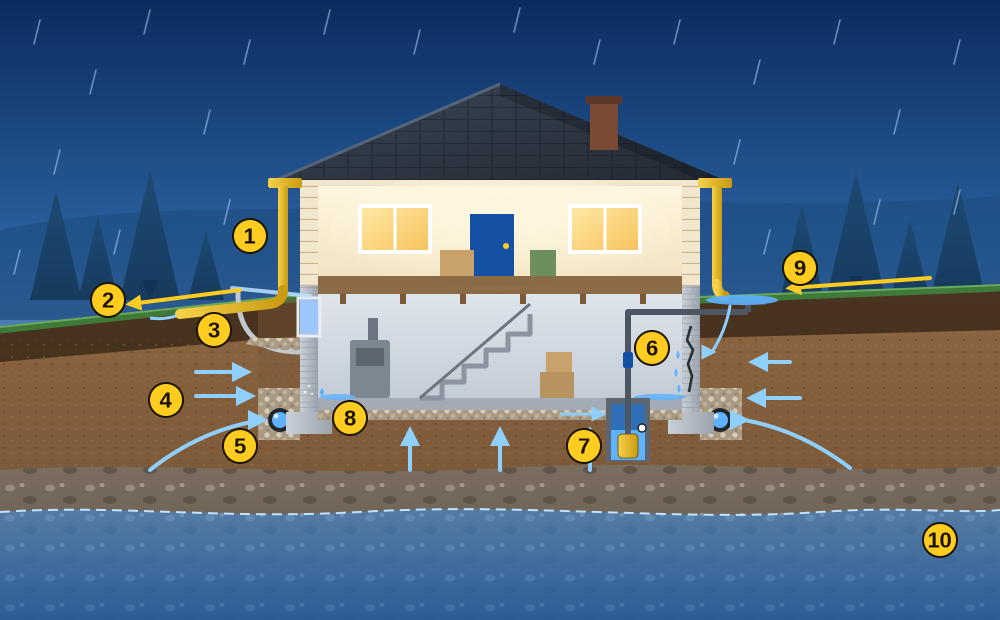
- Gutters and a downspout extension carry roof water away (cause 4)
- Ground sloping away from the house (cause 5)
- Window well with a gravel drain (cause 6)
- Water pressure in wet soil (hydrostatic pressure) (cause 1)
- Perimeter drain in gravel beside the footing (cause 3)
- Crack in the foundation wall, leaking (cause 2)
- Sump pit and pump (cause 9)
- Seepage where the wall meets the floor (cause 7)
- The wrong way: ground sloping toward the house and a downspout dumping at the wall (cause 5)
- High water table (cause 1)
Quick check: where is your water coming from?
| What you see | Likely source | Jump to |
|---|---|---|
| Water at the bottom of the walls or along the wall-floor joint after long or heavy rain | Groundwater, or roof and yard water near the house | 1, 3, 4, 5, 7 |
| Water running from one line or spot in the wall | A crack, a form-tie hole or a gap around a pipe | 2, 8 |
| Water under or around a basement window | Window well | 6 |
| Water coming up from the floor drain, toilet or tub during a big storm, often dirty or smelly | Sewer or storm-drain backup | 10 |
| Sweaty walls or pipes in warm, humid weather, but no puddles after rain | Condensation | 11 |
| Water near the water heater, washer or pipes, even in dry weather | Plumbing leak | 11 |
1Water pressure in wet soil and a high water table
When the soil around your basement fills with water, that water pushes on the walls and up under the floor. This push is called hydrostatic pressure. It forces water through any crack, joint or gap it can find. In extreme cases it can even make concrete buckle (University of Minnesota Agricultural Extension Service).
The water table is the level below ground where the soil is full of water. It can rise in wet seasons or after flooding (University of Minnesota Extension). In the long rainy season of the Pacific Northwest, it may sit close to the basement floor for months.
Usual fixes: drains that relieve the pressure (a perimeter drain outside, or an interior drain), a sump pump, and keeping roof and yard water away from the house.
2Foundation cracks
Concrete shrinks as it dries, and walls can also crack if the footing settles unevenly. Some cracking is normal in concrete basement walls. A crack usually needs repair when it leaks, is wider than 1/8 inch (about 3 mm), or one side has moved out of line with the other. Cracks that keep getting wider need a professional to look at them (National Ready Mixed Concrete Association).
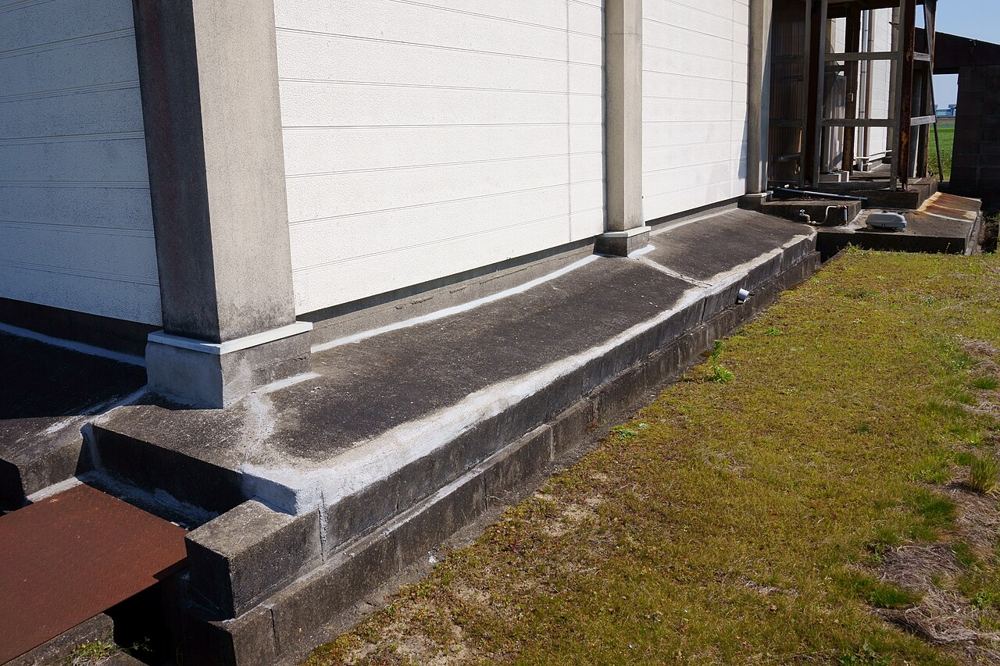

Usual fixes: crack injection from the inside, or sealing from the outside. See foundation cracks.
3Failed or clogged perimeter drains
A perimeter drain (also called a footing drain or drain tile) is a pipe in gravel beside the footing that carries groundwater away before it builds up against the wall. Building scientists recommend placing it outside the foundation (Building Science Corporation). Missing or failed drain tile is one of the listed causes of wet basements (University of Minnesota Extension).
Many older Pacific Northwest homes have drains made of short clay or concrete pieces. Over decades the joints can shift or crack and fill with roots and silt.
Usual fixes: a camera check, then cleaning, repairing or replacing the drain, or adding an interior drain and sump. See perimeter and French drains.
4Gutters and downspouts dumping water at the wall
A roof collects a lot of water. In a 1-inch rain, about 1,250 gallons fall on the roof of a 2,000-square-foot house (University of Minnesota Extension). If gutters overflow, or a downspout empties right beside the wall, that water soaks the soil against the basement.
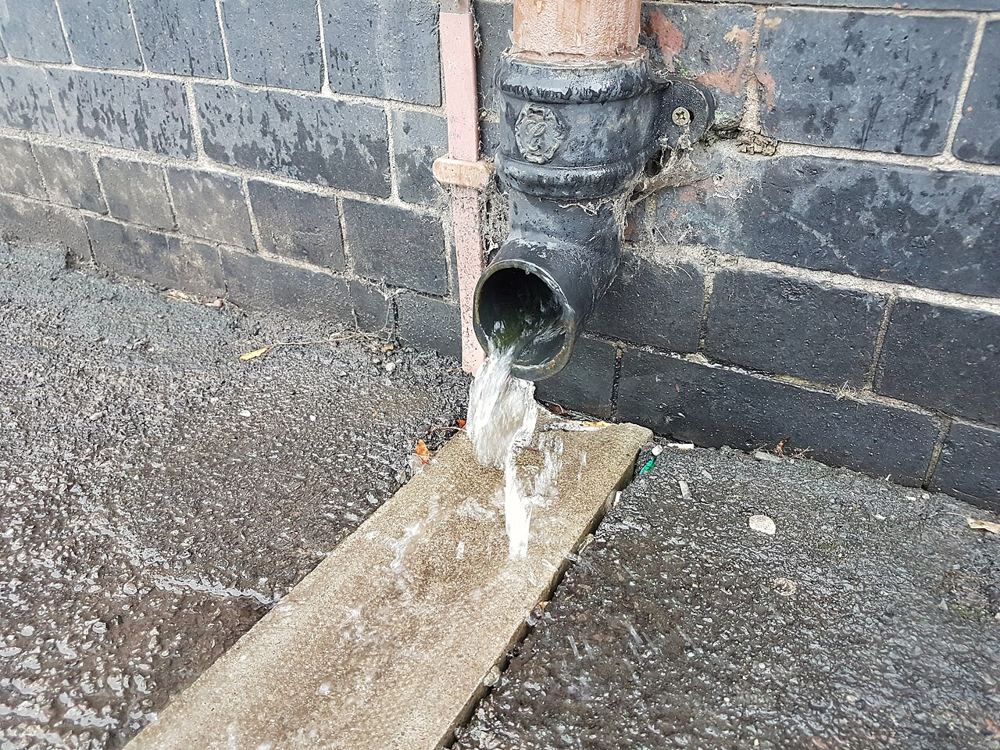

Usual fixes: clean the gutters, and add downspout extensions that let the water out at least 4 feet beyond the wall (University of Minnesota Extension). Only disconnect a downspout from an underground pipe if your city allows it.
5Ground that slopes toward the house
If the yard is flat or slopes toward the house, rain runs to the foundation instead of away from it. Backfill next to a house often settles over time and makes a low spot along the wall (University of Minnesota Extension).
Usual fix: regrade so the soil slopes away from the house at least 1 inch per foot for at least 6 feet (University of Minnesota Extension). Keep soil a few inches below siding.
6Window wells
A window well holds back the soil in front of a basement window. If its drain is blocked or missing, rain fills it like a bucket and pushes in around the window. Window wells collecting rainwater are a known cause of seepage. Clear covers help keep the rain out (University of Minnesota Agricultural Extension Service).
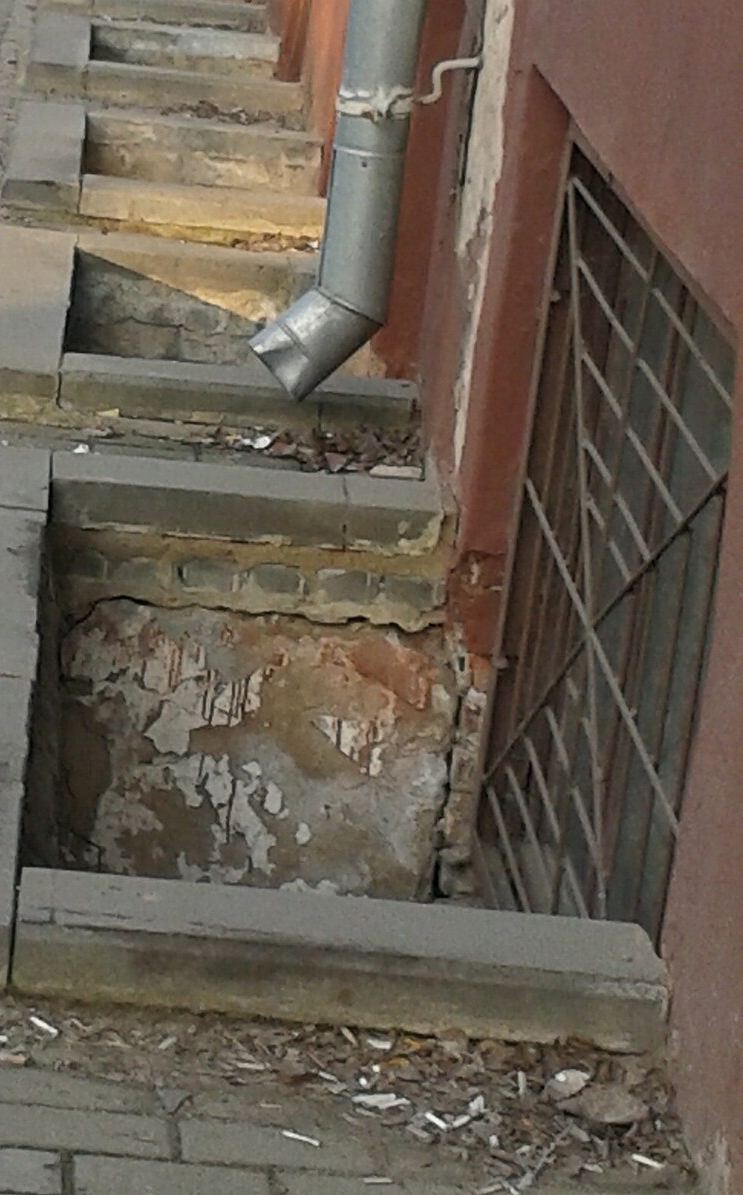

Usual fixes: clean out the well, add or clear a drain at the bottom, and add a cover. See window wells.
7Seepage where the wall meets the floor (the cove joint)
The basement floor is usually poured after the walls, so there is a joint where the two meet. Water under pressure often finds its way in along this joint. Wet soil can also wick water up through porous concrete and leave a damp band at the base of the wall (University of Minnesota Extension).
You may see white, chalky or fluffy crystals on the floor or wall. This is efflorescence: salts left behind when water moves through concrete and dries. It's a sign that water is getting through, even if you never see a puddle.
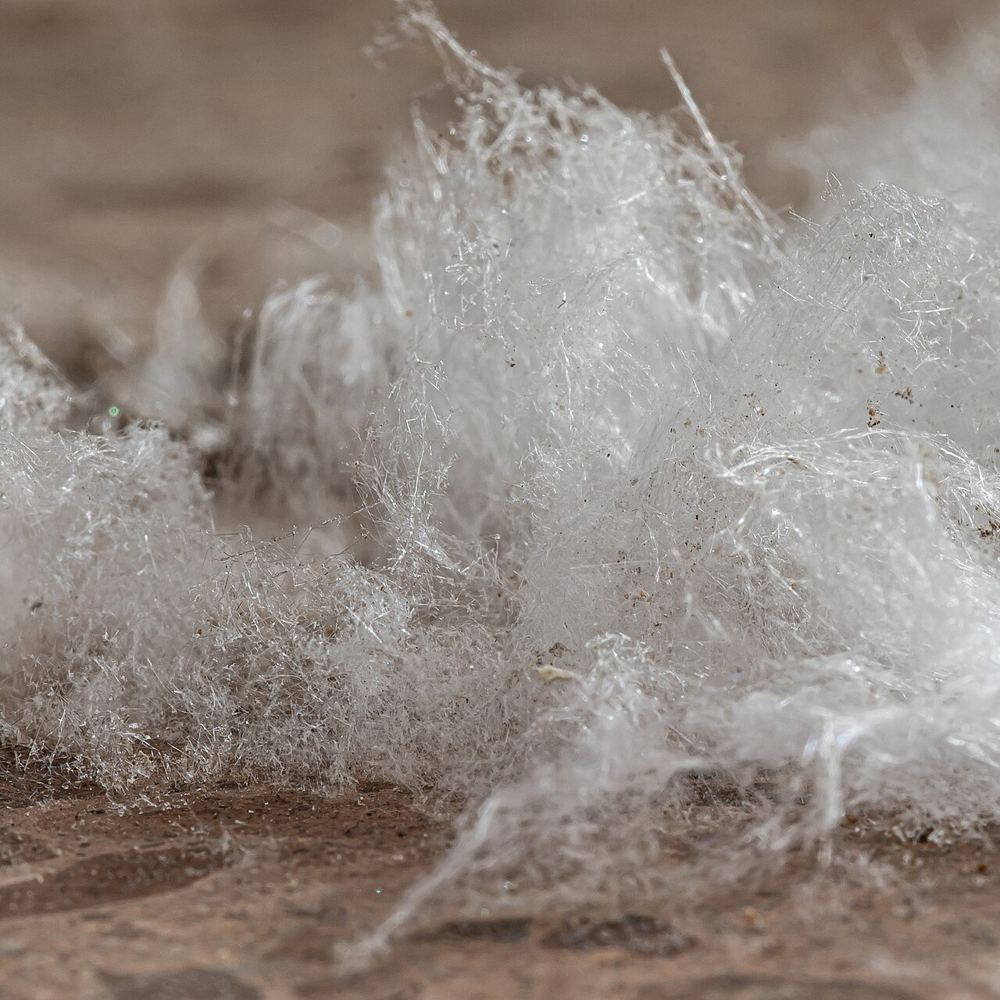

Usual fixes: light seepage can sometimes be sealed. Heavier seepage, or seepage under pressure, usually needs a drain to carry the water to a sump (University of Minnesota Agricultural Extension Service).
8Tie-rod holes and gaps around pipes
Poured concrete walls are built with metal ties that hold the forms together. They leave small holes, usually plugged when the house is built. Those plugs can shrink, crack or come loose over time, and water can come through the hole (EngineerFix). Look for a neat row of small round wet spots or rust stains.
Gaps around pipes and wires that pass through the wall can leak the same way.
Usual fixes: sealing the hole or gap from the inside, or from the outside if it keeps leaking.
9Sump pump failure
If your basement depends on a sump pump, it only stays dry while the pump works. Pumps wear out, floats stick, and the power often goes out in the same storm that brings the water. Building scientists note that sump pumps can fail during power outages (Building Science Corporation).
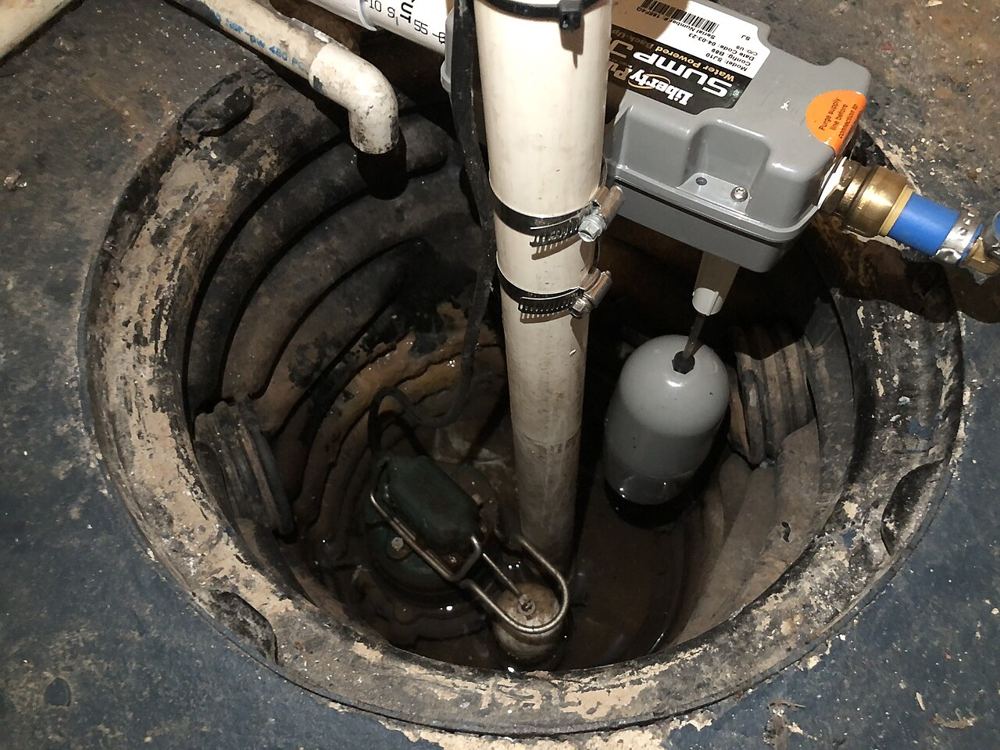

Usual fixes: test the pump before the rainy season, replace an old pump, and add a battery backup pump or an alarm. See sump pumps.
10Sewer and storm-drain backup
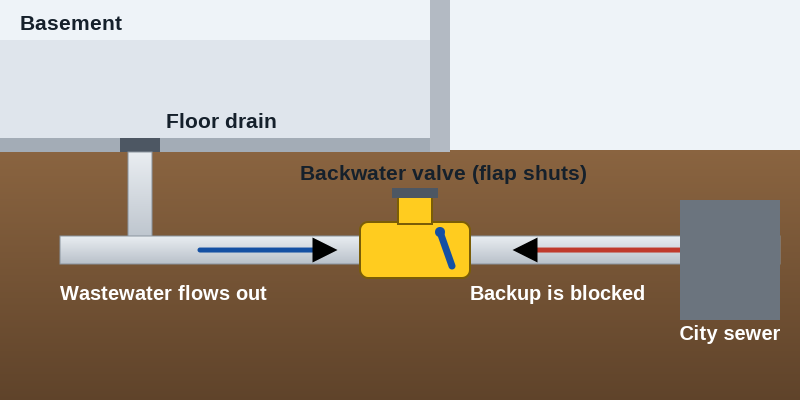
Sometimes the water doesn't come through the walls at all. It comes up through the floor drain, toilet, tub or sump, because the city sewer or the pipe from your house to it (the side sewer) is blocked or overloaded. In older neighborhoods with combined sewers, rain and sewage share the same pipes, so a big storm can overload them. Portland, for example, runs a program for residents of combined sewer areas that are subject to basement flooding (City of Portland Environmental Services).
How to tell it apart from a groundwater leak
- Water appears at the floor drain or a low fixture first, not along the walls.
- It often comes on suddenly during or right after a big storm.
- It may be dirty or smell like sewage.
Main fixes
- Backwater (backflow) valve: a one-way valve in the house drain that lets wastewater out but closes to stop sewage flowing back in (City of Portland Environmental Services). It goes into your main drain line, so it's a job for a licensed plumber. Ask them which permit your city needs.
- Floor drain plug or check valve: a simpler device that stops water coming up through a single floor drain.
- Sump or ejector pit: fixtures below the sewer level can drain to a sealed pit and be pumped up and out.
- Downspouts: where your city allows it, disconnecting downspouts from the sewer keeps roof water out of overloaded pipes. Check with your city before you do this.
Seattle and Portland
- Portland: the plumbing code says fixtures on a floor lower than the next upstream manhole cover must be protected by an approved backwater valve (City of Portland Permitting & Development). The city's Sewer Backup Prevention Program helps pay for a backwater valve for residents of combined sewer areas subject to basement flooding: the resident pays the first $100 and the city pays the next $1,500. You must apply and be approved before hiring a plumbing contractor (City of Portland Environmental Services).
- Seattle: if a plumber thinks the city's sewer main or connection is the problem, Seattle Public Utilities asks you to call them. You can file a damage claim if an SPU sewer problem caused the backup (Seattle Public Utilities). Under its policy DWW-351, SPU may consider funding a backwater valve where its own system caused the backup because it couldn't carry storm flows (Seattle Public Utilities).
11Not groundwater: condensation and plumbing leaks
Not every wet basement has a leak. In warm, humid weather, damp air can condense on cool basement walls and floors, and people often mistake it for a leak (University of Minnesota Extension). Plumbing leaks from supply pipes, the water heater, the washer or drains can also look like a foundation problem.
Try the foil test
Tape a square of aluminum foil (or plastic) tightly on all sides to the dampest spot on the wall. Check it after 24 to 48 hours (University of Minnesota Agricultural Extension Service):

- Moisture on the room side of the foil means condensation. Run a dehumidifier and keep windows closed in humid weather.
- Moisture on the wall side means water is coming through the wall. Look at causes 1 to 8.
Plumbing check: if the wet spot is near pipes or appliances, or stays wet in dry weather, turn off all water use and watch your water meter. If it still moves, you may have a leak in the supply pipes. Call a plumber.
Sources
- University of Minnesota Extension, Moisture in basements: causes and solutions
- University of Minnesota Agricultural Extension Service, Correcting Basement Moisture Problems (Special Report 2, 1981)
- Building Science Corporation, BSD-103: Understanding Basements
- National Ready Mixed Concrete Association, CIP 7: Cracks in Residential Basement Walls
- EngineerFix, How to Properly Seal Rod Holes in Basement Walls (home-repair guide)
- City of Portland Environmental Services, Sewer backups
- City of Portland Permitting & Development, Backwater valves
- Seattle Public Utilities, Side sewer backups
- Seattle Public Utilities, Policy DWW-351: Sewer backup prevention, backwater valves (PDF)
Photos are from Wikimedia Commons under the licenses shown with each photo. Full list: photo-credits.csv.
Why basements leak, in 40 seconds
Press play, or change things yourself and watch what happens.
Why sewage backs up into basements
See how heavy rain pushes the city sewer back up your floor drain, and what stops it.