
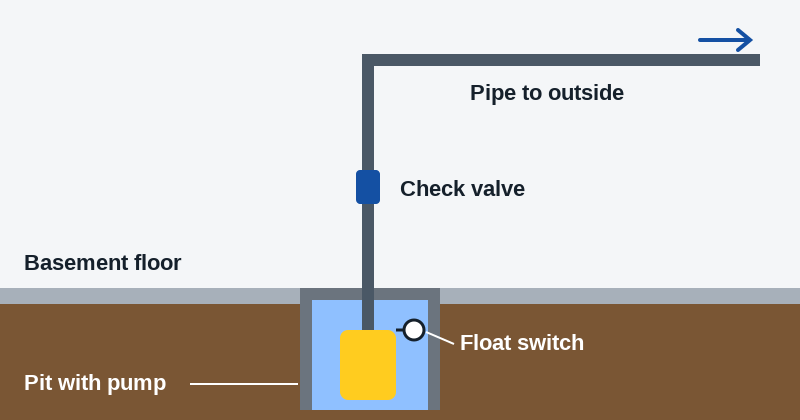
Signs your sump pump needs help
- It runs all the time, even in dry weather.
- It hums but no water leaves the pit.
- It turns on and off very quickly, over and over.
- The pit has filled up near the floor.
- It's loud, rattles, or smells burnt.
What a pro might do
- Replace a worn-out pump or stuck float switch.
- Add a battery backup pump, so it still works when the power goes out in a storm.
- Fix or replace the discharge pipe and check valve.
- Put in a new pit and pump, often as part of an interior drain system.
Typical price: $600 to $2,500 (Fixr), or $1,200 to $2,500 installed (Angi).
A simple test you can do
Slowly pour a bucket of water into the pit. The pump should turn on, empty the pit and turn off. If it doesn't, get it looked at before the next big rain.
Sources
Get up to 3 free quotes
Takes about a minute. Free, with no obligation to hire anyone.
How a sump pump works
Watch the pit fill, the float switch on, and the water get pumped away.